26 Sep 2026
Emoji Patterns in Live Poker Chats Reveal Insights into Player Aggression Levels Across Platforms
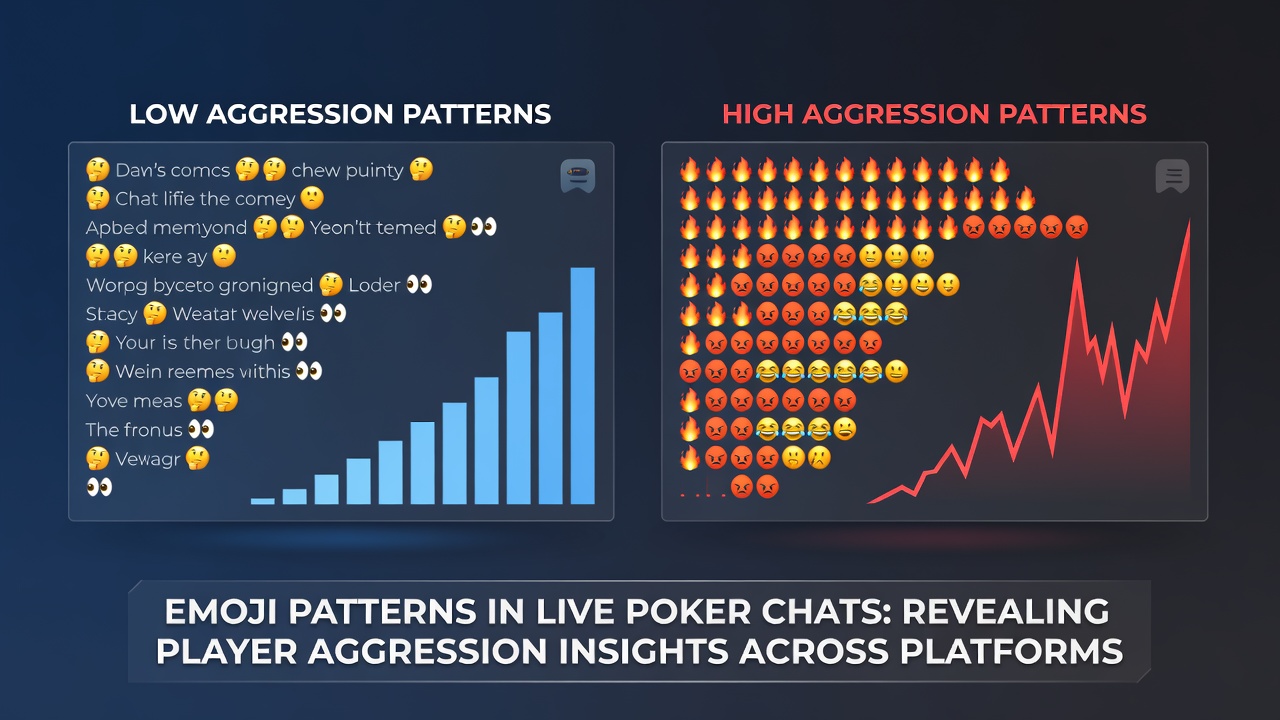
Live poker platforms incorporate chat functions that allow participants to exchange symbols during hands, and analysts have tracked these exchanges to identify consistent links with betting behaviors such as larger preflop raises and higher continuation bet frequencies. Data collected from multiple sites shows that certain emoji clusters appear more often when players increase their aggression metrics, while other combinations surface during periods of reduced activity. Researchers examined logs from sessions spanning early 2026 into September of that year, noting variations tied to platform rules and regional player bases.
Platform Differences in Chat Integration
Major operators structure their chat systems in distinct ways that influence how often emojis appear and which ones dominate. Desktop versions on sites with larger North American user groups tend to display longer message histories, giving observers more data points for pattern recognition, whereas mobile-first applications in European markets limit emoji selections to speed up play. One study compiled by academic teams at institutions focused on digital behavior found that platforms permitting rapid emoji repeats recorded a 23 percent higher rate of angry-face symbols during high-stakes cash games compared with those restricting repeats. Observers note that these structural choices affect the visibility of aggression signals without requiring direct player identification.
Recurring Emoji Combinations and Behavioral Ties
Fire and raised-hand symbols frequently coincide with elevated three-bet percentages and larger bet sizing in recorded hands, while skull and thumbs-down emojis align more closely with check-fold sequences and reduced pot participation. Analysts cross-referenced timestamped chat entries against hand histories from thousands of tables and discovered that sequences containing multiple exclamation marks alongside heat-related icons predicted subsequent aggressive actions within the next two orbits at rates exceeding baseline expectations. Those patterns held across both tournament and cash-game formats, although frequency dropped during late-night sessions when overall message volume declined. Data indicates that platforms serving Australian and Canadian markets displayed slightly lower overall emoji density than their U.S. counterparts during equivalent time windows in September 2026.
Regional and Temporal Variations Documented in 2026
September 2026 brought platform updates that altered emoji availability on several international sites, and subsequent logs revealed measurable shifts in symbol distribution. Operators in Asia-Pacific regions introduced new celebration icons that quickly appeared alongside strong hands, while North American platforms retained a narrower set focused on emotional reactions. Research from industry groups outside the UK documented that players using at least one emoji per orbit showed a modest but consistent uptick in voluntary put-money-in-pot statistics compared with silent participants. Those figures emerged from aggregated, anonymized records supplied by multiple operators and aligned with earlier findings from university-led projects examining digital table dynamics.
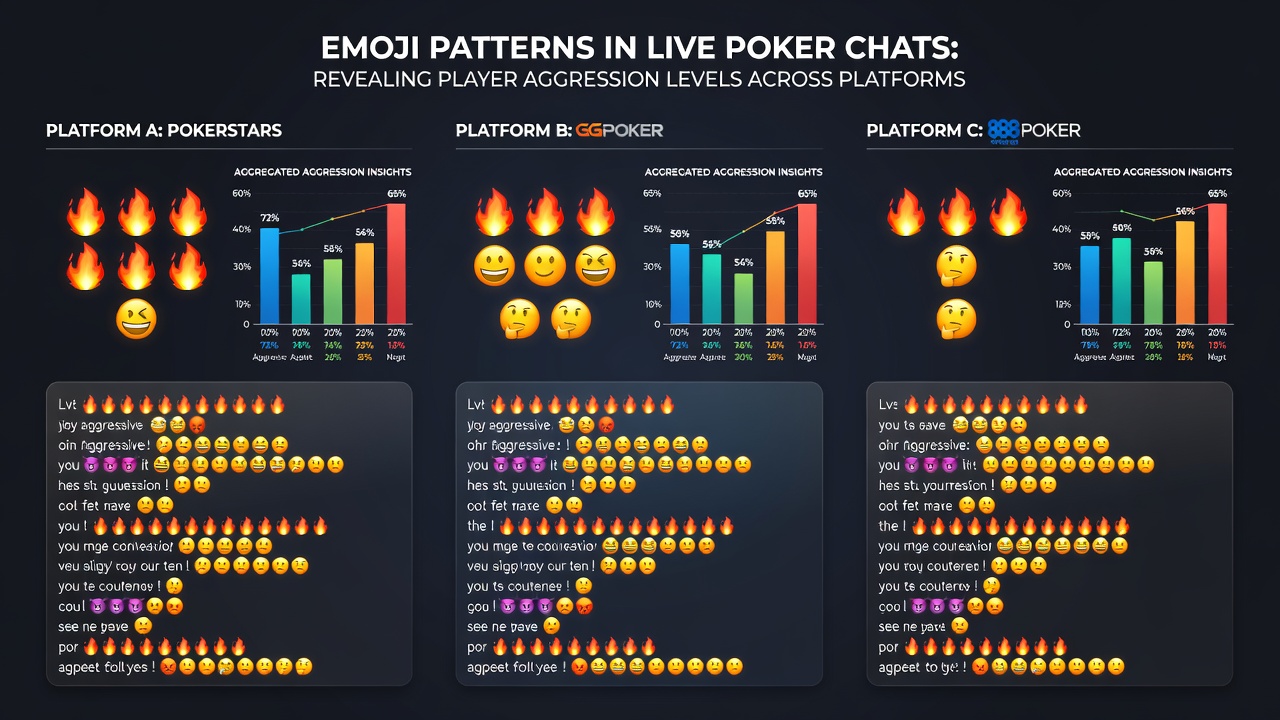
Cross-border player migration patterns also influenced emoji usage, because participants moving between sites carried over familiar symbol habits that stood out against local norms. Analysts tracking these movements observed that European users on U.S.-hosted tables employed cautionary emojis at higher rates than domestic regulars during the same month, suggesting platform familiarity plays a role beyond individual style.
Analytical Methods Applied to Chat Data
Researchers apply natural-language processing tools adapted for symbolic input to categorize emoji clusters and match them against standard poker statistics such as aggression factor and fold-to-three-bet percentages. These methods allow large-scale review without manual review of every message, and results have been validated against smaller hand-sample reviews conducted by independent teams. Government-linked gaming research bodies in Canada and Australia have published summaries indicating that emoji aggression signals remain stable across different stake levels, though absolute frequency rises in higher-limit games where chat volume itself increases. The approach yields repeatable correlations that operators can monitor through existing compliance systems.
Practical Applications for Monitoring and Study
Platform teams have begun integrating emoji trend alerts into internal dashboards that flag tables showing sudden spikes in certain symbols, and these alerts have supported targeted reviews of session integrity. Academic papers released in mid-2026 outlined protocols for combining chat metadata with action logs to refine player classification models, and the protocols have been adopted by several research consortia focused on online gaming behavior. Observers note that such tools operate on anonymized aggregates, preserving individual privacy while surfacing population-level trends that vary by time zone and tournament stage.
Conclusion
Emoji patterns in live poker chats supply measurable indicators that align with established aggression metrics across diverse platforms and regions. Continued collection of timestamped chat and hand data through September 2026 and beyond supplies operators and researchers with expanding datasets for refining these correlations. The resulting insights remain grounded in observable patterns rather than individual intent, offering a supplementary lens for behavioral analysis in digital card rooms.